Quick answer
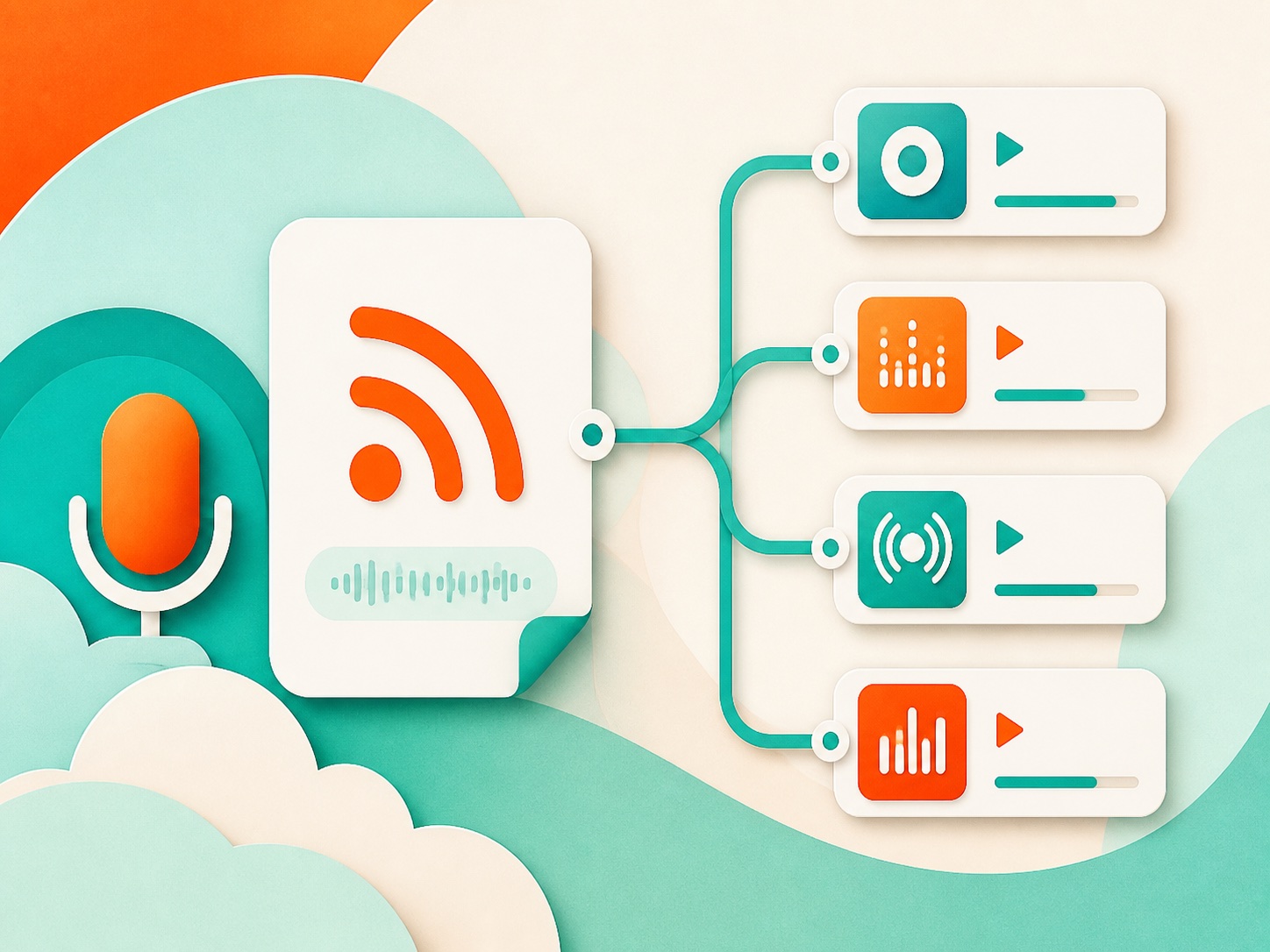
Do not choose one platform—build a small stack
- 1Use Apple, Spotify, YouTube, and Amazon for broad listening availability.
- 2Claim Goodpods and Podchaser for community proof, lists, ratings, and reviews.
- 3Check Listen Notes so the show can be found in a podcast search database.
- 4Launch one current episode on The Pod Radar for a time-limited listener action and weekly ranking.
The key distinction
A directory listing is not a promotion campaign
Traditional directories solve distribution. Community databases add social proof and search. A launch board creates a specific moment around one episode.
Listening directory
Be available
The platform reads the RSS feed and keeps the show's episode catalog current.
Community database
Build proof
Listeners can search, rate, review, comment, follow, or collect shows and episodes.
Weekly launch board
Create a moment
One current episode gets a public page, listener actions, and a defined ranking week.
Side-by-side
Podcast directories and discovery sites compared
The highlighted option is our own. We have kept it in the table because it complements directories; it does not replace them.
| Option | Type | Main listing | Listener actions | Discovery model | Basic creator use |
|---|---|---|---|---|---|
| Listening directory | Show and RSS episode catalog | Listen, follow, rate, and review | Search, editorial surfaces, recommendations, and charts | Free RSS submission | |
| Listening platform | Show and episode catalog | Listen, follow, save, and rate | Search and personalised recommendation surfaces | Free listing and claim | |
| Video and listening platform | RSS episodes imported as static-image videos | Watch or listen, subscribe, like, and comment | YouTube search and recommendations | Free RSS ingestion where available | |
| Community directory | Shows and episodes | Listen, rate, comment, subscribe, and share | Lists, groups, category pages, and community-ranked charts | Free listing and claim | |
| Podcast database | Shows, episodes, credits, and creators | Rate, review, follow, and create lists | Search, lists, reviews, profiles, and charts | Free listing and claim; Pro data is separate | |
| Podcast search database | Shows and episodes from public RSS | Search, preview, and open listening links | Topic and episode search, plus downstream API use | Free show submission; API plans are separate | |
The Pod RadarOur platform | Weekly discovery board | One creator-selected current episode | Play, vote, comment, and visit listening platforms | A time-limited public ranking and episode launch page | Free episode launch; optional featured placement is separate |
Basic creator access checked on 11 August 2026. Optional hosting, subscriptions, advertising, paid data, and featured products are not treated as part of the free listing.
Recommended stack
A practical free distribution and discovery stack
- 1
Layer 1
Secure broad availability
Submit the RSS feed to Apple Podcasts, Spotify, YouTube, and Amazon Music. These are the listening destinations you should not try to replace with a promotion site.
Listeners can use the app they already prefer.
- 2
Layer 2
Claim searchable community profiles
Check Goodpods, Podchaser, and Listen Notes before creating anything new. Claim the existing show and complete the information the platform allows you to control.
Search results and social proof point to the correct show.
- 3
Layer 3
Give one episode an active launch
Submit the episode with the clearest listener promise to The Pod Radar, then share its public page during the ranking week.
Availability becomes a timely reason to listen and respond.
Before you list
Check the source once before multiplying it everywhere
Every platform depends on the same show identity and feed. A bad source creates repeated clean-up work.
- Validate the public RSS URL and confirm it loads without authentication
- Use one consistent show title and square cover across every listing
- Write a show description for listeners, not a list of broad keywords
- Publish at least one complete episode or trailer
- Keep access to the email used for ownership verification
- Save each public listing URL and the account used to claim it
- Search for an existing listing before submitting a duplicate
If you are starting from scratch, follow the podcast directory submission checklist. If a platform rejects the feed, use the free RSS validator comparison.
FAQ
Podcast directory questions
Is The Pod Radar a podcast directory?
Not in the traditional sense. Apple Podcasts, Spotify, and similar services continuously read a show's RSS feed. The Pod Radar is an episode-first weekly discovery board: creators choose a current episode to launch, and listeners can play, vote, and comment during that ranking week.
Which podcast directories should I submit to first?
Start with Apple Podcasts, Spotify, YouTube and YouTube Music, and Amazon Music. Then claim or check your show on community and search databases such as Goodpods, Podchaser, and Listen Notes.
Are these podcast listings free?
The basic RSS listing, claim, or submission paths compared here are free as of the review date. Some platforms sell optional subscriptions, hosting, promotion, advertising, data, or professional features.
Do I need to submit every episode to every directory?
No. Submit the show feed once to a traditional directory and it should ingest later episodes from RSS. The Pod Radar is different because you deliberately choose the episode you want to put into a weekly launch.